
What’s True, What’s Not, and What the Bible Already Says
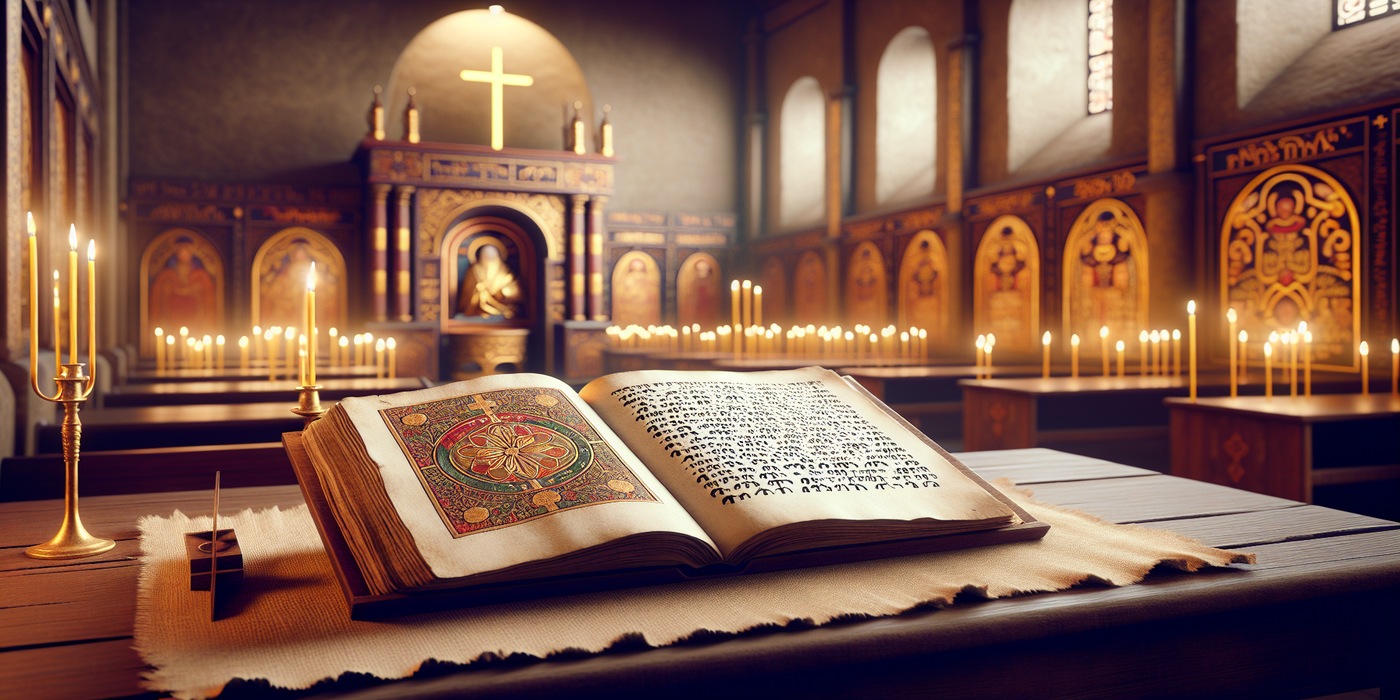
A video is circulating widely right now. It is well-produced, confidently narrated, and built around a genuinely compelling idea: that the Ethiopian Bible preserves a portrait of Jesus that was deliberately suppressed by the Roman church, and that Mel Gibson’s upcoming film will finally show the world what was hidden.
Millions of people have watched it. Many have found it genuinely moving. Some have walked away convinced that the Christianity they know is a managed, edited, institutionally convenient version of something far more powerful.
Here is the problem: the video mixes real history with significant exaggerations, and at least one moment that appears to be an outright fabrication attributed to ancient scripture.
This matters. Not to protect institutions. But because the truth about Jesus, the actual Jesus of the actual historical record and the canonical scriptures, is already more extraordinary than the video gives him credit for.
You do not need conspiracy theory to encounter a Jesus who commands angels, whose face blazes with unbearable light, and before whom time and creation itself bow. He is already there. He has always been there. In the Bible you can buy at any bookshop.
Let’s go through it carefully.
Watch the Video First
What the Video Gets Right
Before debunking anything, honesty requires acknowledging what the video accurately presents. There is genuine historical substance here, and dismissing it entirely would be as misleading as accepting it uncritically.
The Ethiopian Orthodox Tewahedo Church Is One of the Oldest Christian Institutions on Earth
This is true and worth taking seriously. Christianity arrived in the Kingdom of Aksum in the 4th century, primarily through Frumentius, who became the first Bishop of Axum around 328 AD. The Ethiopian church developed its theology, liturgy, and canon independently of Rome. Its sacred language, Ge’ez, is ancient. Its manuscript traditions are genuine and largely unstudied by Western scholars. None of this is in dispute.
The Ethiopian Biblical Canon Does Include More Books
The Ethiopian Bible or Ethiopian Orthodox canon contains texts absent from Protestant, Catholic, and Eastern Orthodox Bibles. This includes 1 Enoch (the Book of Enoch), the Book of Jubilees, and the Ascension of Isaiah. These texts are real, ancient, and theologically rich. Their presence in the Ethiopian Bible or canon is not a conspiracy theory. It is a documented feature of how different Christian communities across history approached the question of scripture.
The Book of Enoch Is a Serious Ancient Document
Fragments of 1 Enoch were found among the Dead Sea Scrolls, confirming it circulated widely among Jews in the Second Temple period. The Epistle of Jude (verses 14 and 15) directly quotes 1 Enoch as prophecy. Several early Church Fathers, including Tertullian, treated it as authoritative. It is not a forged or fringe text. It is genuinely ancient and was genuinely read by early Christians.
The Parallel Between Enoch’s Son of Man and Revelation 1 Is Legitimate Scholarship
This is one of the most accurate claims in the video. Scholars of Second Temple Judaism and early Christianity widely acknowledge that the author of Revelation drew from the Enochic tradition. The descriptions in 1 Enoch of the Son of Man with white hair, blazing countenance, and cosmic authority are strikingly parallel to Revelation 1:14-16. This is not coincidence and mainstream scholarship does not treat it as such.
The Ascension of Isaiah Describes Seven Heavens and Christ’s Descent
The text does describe this. The vision of Christ descending through seven heavens, veiling his glory at each level so as not to be fully recognised, is present in the Ascension of Isaiah. The video represents this accurately.
Where the Video Goes Wrong
The “44 More Books” Claim Is Approximately Double the Reality
The video states the Ethiopian Bible contains 44 more books than most Protestant Bibles. This number is significantly inflated.
A standard Protestant Bible contains 66 books. The Ethiopian Bible (The Ethiopian Orthodox canon) is generally cited by scholars as containing between 81 and 87 books, depending on denomination and how certain texts are counted. The difference is roughly 15 to 21 books, not 44.
This may seem like a minor detail. It is not. The entire emotional argument of the video rests on the idea that an enormous body of truth was suppressed. Doubling the actual figure in service of that argument is not an accident, it is a persuasion technique.
“Copies Were Hunted Down and Burned” Is Dramatic Myth
The Council of Laodicea (363 AD) was a regional synod in Asia Minor. It produced a canonical list that excluded various texts. What it did not have was the enforcement power to conduct systematic book hunts across the Roman Empire, let alone across Africa, the Middle East, and beyond.
Books like 1 Enoch survived in multiple locations and manuscript traditions. The idea that copies were systematically destroyed in a coordinated purge is a romantic narrative without strong historical evidence. The more accurate picture is gradual liturgical disuse, combined with the fragility of manuscripts over centuries, not organised suppression.
The Real Reason Texts Were Excluded Is More Complex Than Power
The video presents a clean and satisfying explanation: the institutional church banned these texts because they threatened clerical authority by describing direct, unmediated access to God. No priest required. No sacrament required. No tithe required.
This narrative is popular. It is also a serious distortion.
The canonical decisions of the early church involved multiple criteria: Was the text believed to have apostolic authorship or origin? Was it used liturgically across the broad community of churches? Was its theology consistent with the apostolic tradition as understood across multiple centres, not just Rome? Was it being selectively used by heterodox groups to support teachings at odds with the apostolic witness?
1 Enoch was excluded partly because its authorship was disputed, partly because it was not used in liturgy across the broad church, and partly because certain Gnostic groups were weaponising apocalyptic texts for their own theological agendas.
Furthermore, the suppression-of-direct-access argument collapses when you read what actually made it into the canon.
The Gospel of John, which survived every council, includes Jesus saying: “I am the way, the truth, and the life” (John 14:6). Romans 8:15-16 describes believers receiving the Spirit of adoption, crying out to God directly as Father. Galatians 4:6 says the Spirit of God’s Son is sent into human hearts. Hebrews 10:19-22 describes every believer entering the Most Holy Place directly through Christ. 1 Peter 2:9 calls all believers a royal priesthood with direct access to God.
If the institutional church was suppressing direct, unmediated access to God, it did a catastrophically poor job. The canonical Bible is saturated with it.
The Fabricated Quote: The Most Dishonest Moment in the Video
This is where the video crosses from exaggeration into something more serious.
The narrator attributes the following words to Christ, claiming they come from texts the Ethiopian tradition preserved:
“You are not children of dust, you are children of light. The kingdom of God does not come from outside you, it is already within you. Salvation is not a transaction, it is an awakening to what you already are.”
This is presented as suppressed teaching that the institutional church removed because it was too threatening to clerical power.
Here is the problem: no such composite passage exists in 1 Enoch, the Ascension of Isaiah, the Book of Jubilees, or any other Ethiopian Bible or canonical text in the form presented.
The individual phrases draw from texts that were never suppressed at all:
- “Children of light” comes from John 12:36 and 1 Thessalonians 5:5, both canonical and freely available.
- “The kingdom of God does not come from outside” paraphrases Luke 17:20-21, which is in every Bible on Earth.
- “Salvation is not a transaction, it is an awakening” is a modern theological editorial with no ancient textual basis.
The quote reads as a modern synthesis, assembled to make a specific theological argument (salvation without institutional mediation) and then attributed to ancient Ethiopian sources to give it false authority. If you can identify the specific passage in the Ethiopian Bible that contains this language verbatim, please cite it. No scholar has.
This is the technique that makes this kind of content genuinely harmful: taking real ancient sources, building credibility through accurate details, and then sliding in fabricated or misattributed material using the same authoritative voice.
What the Bible Already Says About the Cosmic Christ
Here is the irony at the heart of this video: it goes to extraordinary lengths to describe a cosmic, terrifying, universe-commanding Jesus who was supposedly hidden from Western Christianity.
That Jesus is already in your Bible.
Colossians 1:15-17 describes Christ as the image of the invisible God, the firstborn over all creation, the one through whom all things were created in heaven and on earth, visible and invisible, thrones, powers, rulers, and authorities. All things were created through him and for him, and in him all things hold together.
That is not a manageable Sunday school figure. That is the sustaining force of the entire cosmos.
Revelation 1:14-16 describes the risen Christ with hair white as wool, eyes blazing like fire, feet glowing like bronze in a furnace, a voice like the roar of many waters, and a face shining like the sun in full strength. The apostle John, who had lived with Jesus for three years, fell at his feet as though dead.
Hebrews 1:3 calls Christ the radiance of God’s glory and the exact representation of his being, sustaining all things by his powerful word.
Philippians 2:9-11 states that God has exalted him to the highest place and given him the name above every name, that at the name of Jesus every knee will bow, in heaven and on earth and under the earth, and every tongue confess that Jesus Christ is Lord.
John 1:1-3 opens with Christ as the eternal Word, present before creation, the agent through whom everything that exists came into being. Not a prophet. Not a teacher. The source of existence itself.
Ephesians 1:20-23 describes Christ seated at God’s right hand in the heavenly realms, far above all rule, authority, power, and dominion, with all things placed under his feet.
The cosmic Christ of the Ethiopian Bible tradition and the Book of Enoch is not in contradiction with the canonical Bible. He is consistent with it. The canonical Christ is already overwhelming. He already commands angels. Time already bends around his resurrection. He already holds the universe together by his word.
The video implies you need suppressed texts to encounter this Jesus. You do not. You need to actually read the Bible you already have.
Why Were Some Books Excluded? An Honest Answer
The canon of scripture developed over several centuries through a process of discernment across the broader church. The criteria used were not primarily political, though politics were never entirely absent. The core questions were:
Apostolicity: Was the text written by an apostle or someone in direct relationship with the apostolic generation? 1 Enoch was pseudonymous (written in the name of the patriarch Enoch, not an apostle). Its authorship placed it outside the apostolic witness.
Catholicity: Was the text read and recognised across the broad community of churches, not just in one region? 1 Enoch had strong regional use but was not universally received.
Orthodoxy: Was the text consistent with the rule of faith as understood across multiple centres of the church? Some apocryphal texts were excluded because Gnostic movements had attached theological frameworks to them that the broader church considered inconsistent with the apostolic teaching.
Liturgical use: Was the text used in the gathered worship of the church over time?
These are not corrupt criteria. They are reasonable criteria for a community trying to identify which texts genuinely carried the weight of apostolic revelation. Reasonable people can disagree about where specific lines should be drawn, and different traditions have drawn them in different places. The Ethiopian church drew them differently. That is worth engaging honestly.
But the idea that the process was primarily a power grab designed to hide a threatening Jesus is not supported by the evidence, and it requires ignoring the cosmic, authoritative Christ who is present throughout the texts that did make it into the canon.
Mel Gibson’s Film: What We Actually Know
The Resurrection of the Christ Part 1 is reportedly in production at Cinecittà Studios in Rome, with a targeted release on Good Friday 2027. This much appears to be confirmed.
Gibson’s creative vision, as described in various interviews including on the Joe Rogan Experience, does involve moving through multiple realms and dimensions rather than a single linear narrative. This is not fabricated.
What the video fabricates is the claim that Gibson specifically and independently discovered the Ethiopian Bible or canonical tradition and is now faithfully transmitting it to the world. Gibson has not confirmed this. The connection between his stated vision and the specific Ethiopian Bible texts is the narrator’s inference, not Gibson’s confirmed source material.
The Passion of the Christ was a genuine artistic achievement that demonstrated audiences would engage seriously with uncompromising biblical cinema. If the sequel approaches the resurrection with similar conviction, it has the potential to be extraordinary. But that is a film yet to be seen, not a theological revelation to be trusted in advance.
The Honest Summary
| Claim | Verdict |
|---|---|
| Ethiopian Orthodox Church is one of the oldest Christian institutions | True |
| Ethiopian Bible includes more books than Protestant Bible | True |
| Ethiopian Bible contains 44 more books than Protestant Bible | False, roughly 15 to 21 more |
| Book of Enoch is ancient and was quoted by early Christians | True |
| Jude directly quotes 1 Enoch | True |
| Revelation parallels the Enochic Son of Man | Legitimate scholarship |
| Ascension of Isaiah describes seven heavens and Christ’s descent | True |
| Texts were systematically hunted down and burned | Exaggerated, no strong evidence |
| Books were banned to protect institutional power from a direct-access Jesus | Reductive conspiracy framing |
| The canonical Bible suppresses the cosmic Christ | False, he is extensively present |
| The quoted Christ words come from Ethiopian Bible scripture | Almost certainly fabricated |
| Gibson’s film is in production | Reportedly true |
| Gibson confirmed the Ethiopian Bible texts as his specific source | Not confirmed |
What This Means for You
If this video intrigued you, that intrigue is not wasted. The questions it raises are worth asking:
Do you know the Christ of Colossians 1? Of Revelation 1? Of John 1? The one who holds the cosmos together, whose face blazes like the sun, who was present before the foundations of the world?
Do you know the Ethiopian Bible’s Orthodox tradition? It is genuinely ancient, genuinely rich, and genuinely worth studying without the conspiracy framing. The Book of Enoch, properly understood in its historical context, is a fascinating window into how Second Temple Jews thought about the coming Messiah, and how the authors of the New Testament engaged with those traditions.
Do you know why canonical decisions were made the way they were? Not because you should accept them uncritically, but because understanding the reasoning is far more interesting than a simple suppression narrative.
The cosmic Christ was never hidden. He was never suppressed. He is in Colossians. He is in Revelation. He is in the opening of John’s Gospel. He has been there the whole time.
The monks in Ethiopia who kept copying those manuscripts were not preserving a secret. They were preserving a tradition. And their tradition points to the same Christ the canonical scriptures describe: a being of absolute, terrifying, universe-sustaining authority, who chose to arrive as an infant in a feeding trough, die on a Roman execution stake, and walk out of a sealed tomb three days later.
That story does not need embellishment. It does not need conspiracy. It does not need a YouTube narrator to make it extraordinary.
It already is.
Sources and further reading: 1 Enoch (R.H. Charles translation, public domain), the Ascension of Isaiah (public domain), E. Isaac’s translation in “The Old Testament Pseudepigrapha” (Charlesworth, ed.), “The Canon of the New Testament” by Bruce Metzger, and the Ethiopian Orthodox Tewahedo Church’s own published statements on their biblical canon.
